Configure your shade sail online
Design, shape, fabric. Ready in 5 days.
Learn more
FIXED SHADE SAILS
ROLL-UP SHADE SAILS
OUTLET & ACCESSORIES
SAILS BY SHAPE
BUYING GUIDE
INSTALLATION GUIDE
APPLICATIONS
BUYING GUIDE
CUSTOM ROLLER SHADES
STANDARD ROLLER SHADES
BUYING GUIDE
BUYING GUIDE
Shade sails
To properly install your retractable sail, it is essential to take accurate measurements. Start by identifying the anchor points and estimating the distances with some tolerance. Once the anchors are installed, you will need to precisely measure the distance between them.
Following these guidelines will ensure a perfect and functional installation. Check out the complete guide for all the details!
Thanks to our online configurator, we've simplified the purchase and installation process by dividing it into two distinct phases.
Each phase corresponds to a separate order, and you'll receive the materials in two separate shipments, maximizing accuracy and ease of assembly.

Identify the anchorage points and measure the approximate distances.
Configure your shade sail online.
In this phase, you only pay for Kit Phase 1, which includes all anchorages (poles and/or wall plates).
You will receive the chosen anchorages, fabric samples, a measuring cord for precise measurements, and all necessary fastening materials. Install the supports in your outdoor space.
Visit the website and enter the precise measurements taken after installing the anchorages. Choose the fabric and purchase the second part of your order: shade sail, roller, and accessories.
In just a few days, you'll receive your custom-made shade sail along with its roller, motor, wind sensor, solar panel, and all included accessories. The assembly is quick, straightforward, and entirely DIY.
Accurate measurements are essential to ensure a flawless installation.
During the configuration phase of your shade sail, you'll be asked to provide measurements between the anchorage points. At this initial stage, extreme precision isn't necessary; a tolerance of a few inches is acceptable. These measurements help us calculate the optimal configuration and provide an estimated price for your custom shade sail.
After receiving and installing the Phase 1 Kit, which includes a professional-grade measuring cord, you can proceed to accurately measure the actual distances between the anchorage points. These precise measurements are crucial for manufacturing the custom shade sail and roller, and should be entered into your user panel before completing the purchase of the Phase 2 Kit.
IMPORTANT: All requested measurements refer to the anchorage points, not the fabric dimensions. The system will automatically calculate the fabric size based on these inputs.


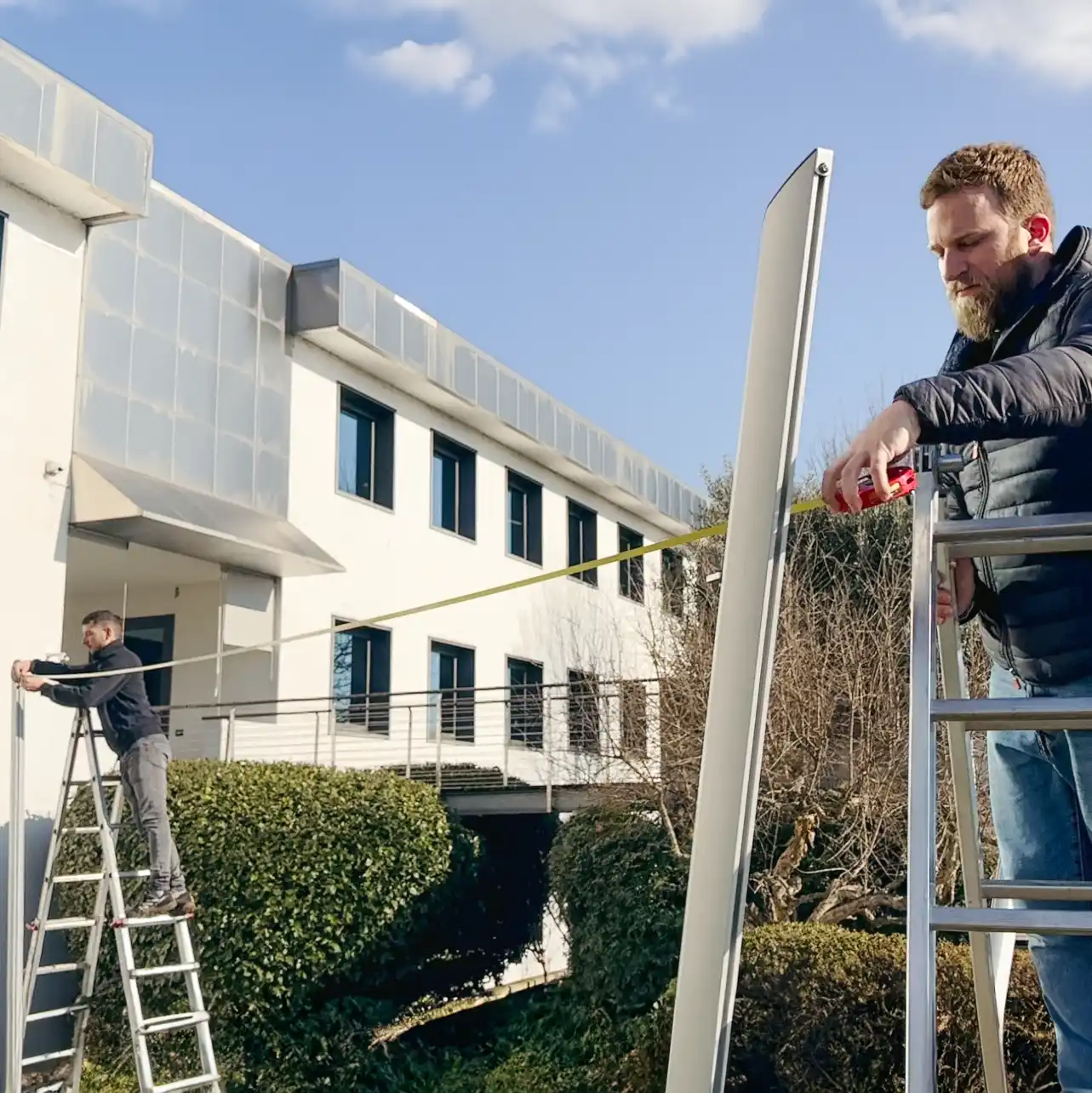
Use a rigid measuring tape to measure the area where you plan to install the shade sail, taking into account any obstacles such as walls, trees, or other elements that might affect the installation.
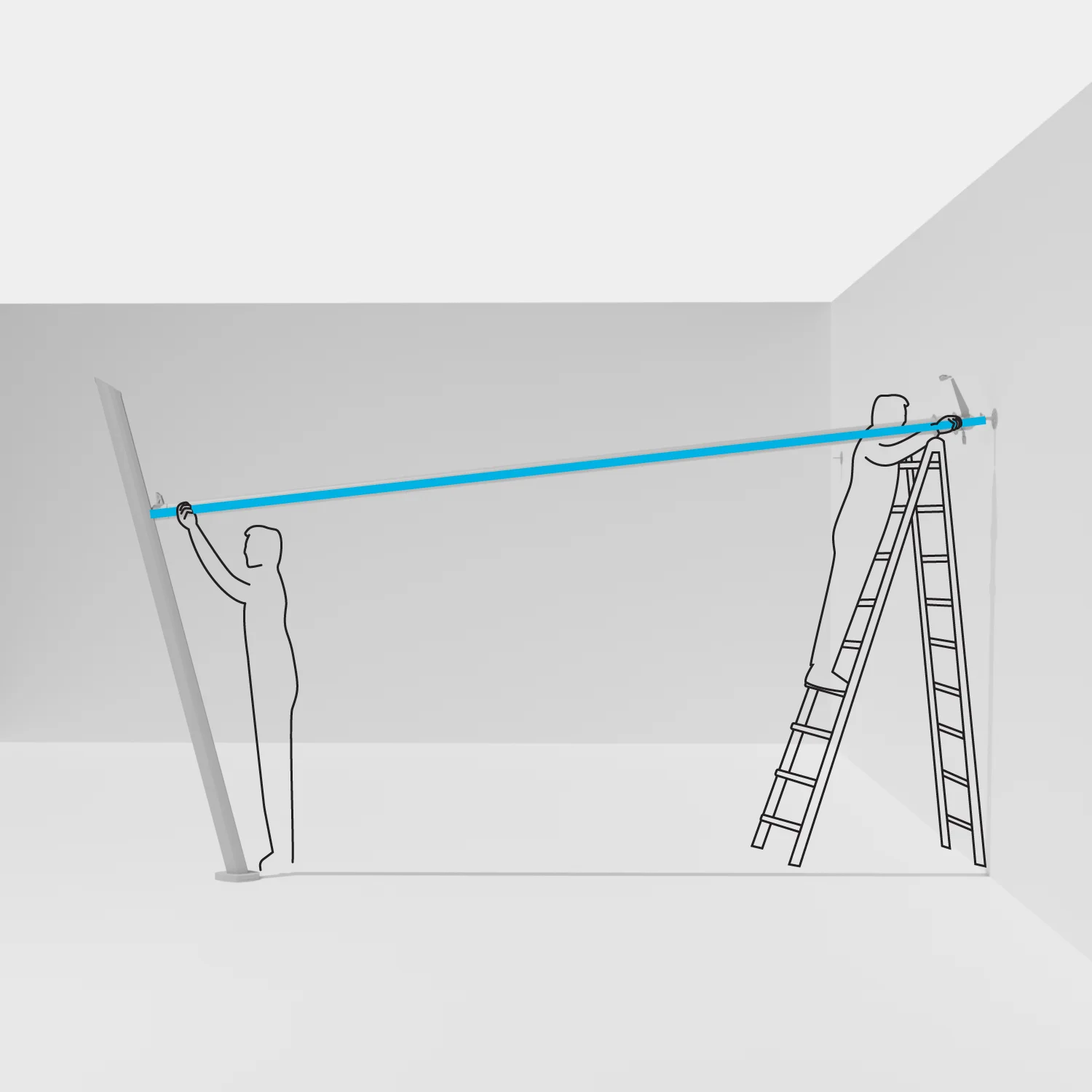
Utilize the measuring cord provided with your anchorage kit to precisely measure the angles and diagonals of your shade sail.
Ensure accurate measurements by keeping the measuring cord taut and measuring from the center of the anchorage hole.
Note: When measuring for the roller, account for its potential tilt and the final anchorage height.

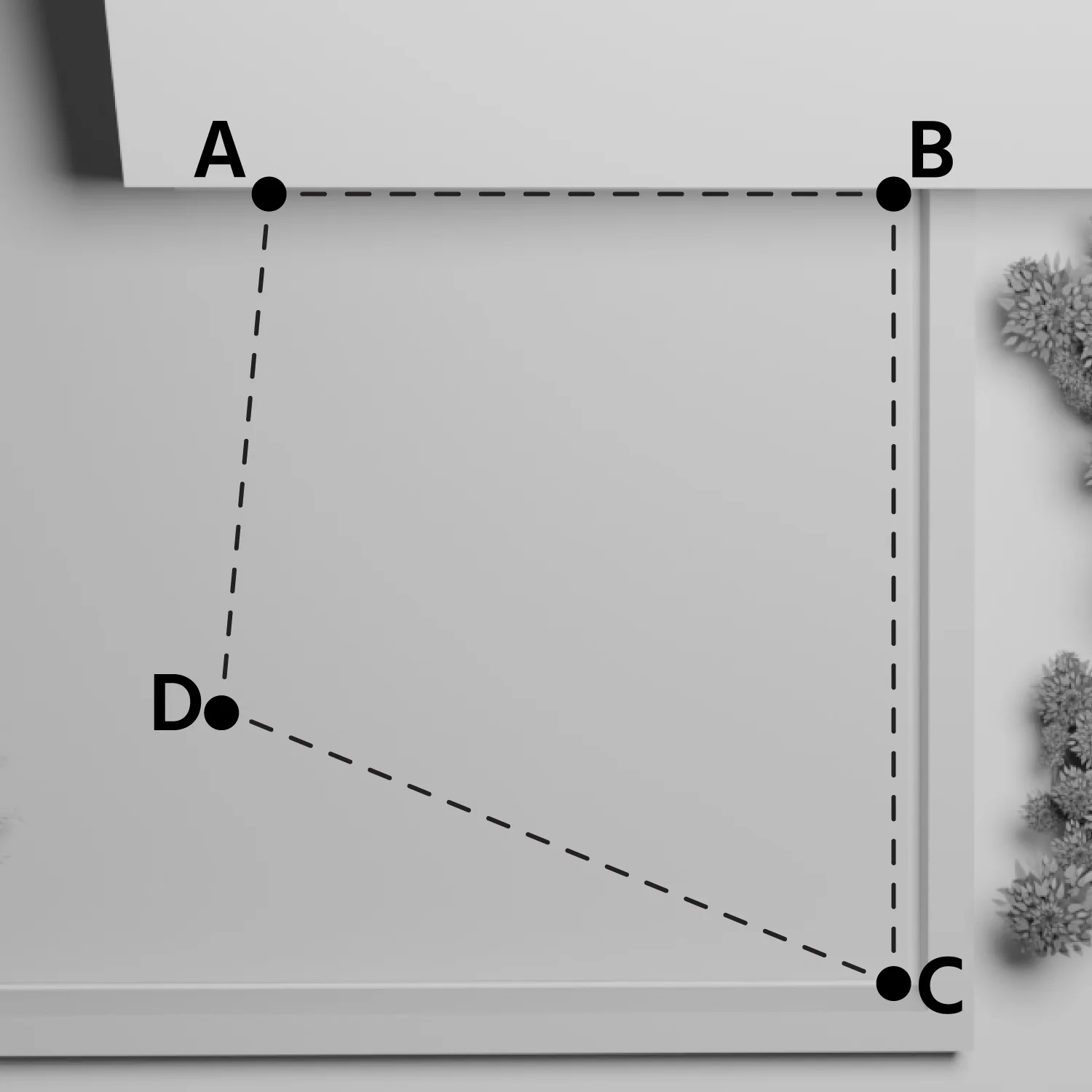
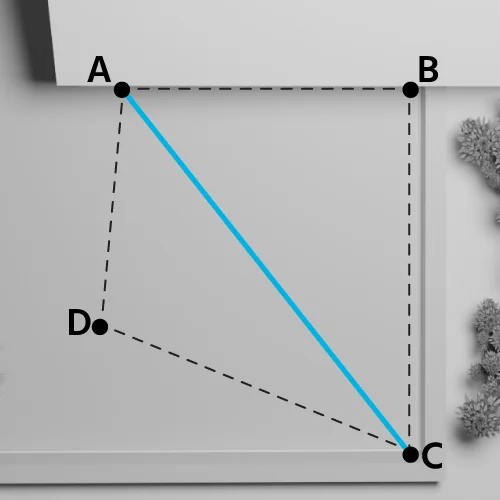
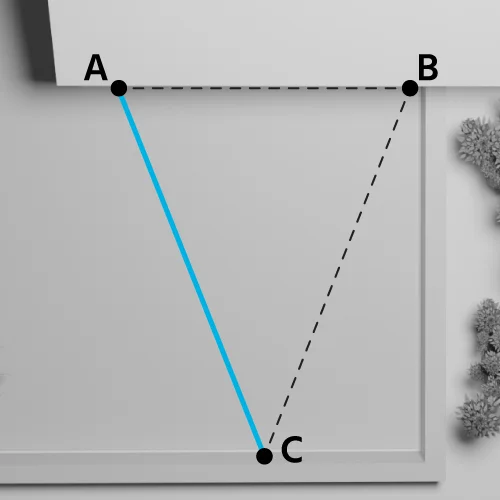
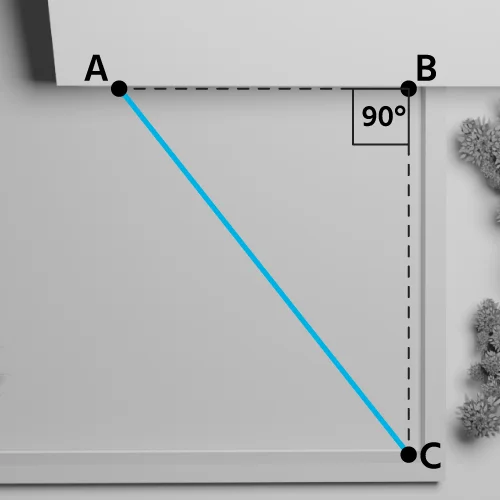
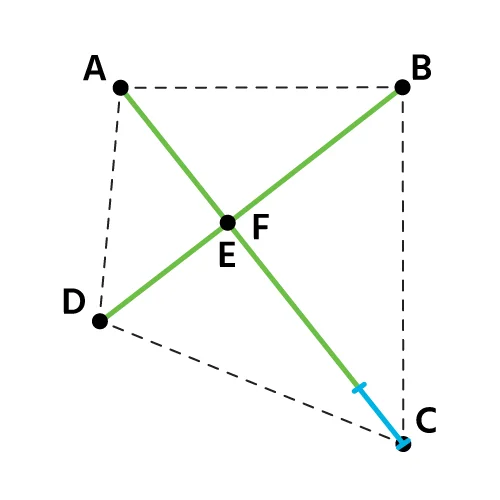
The AC side is conventionally referred to as the roller side.
In a quadrilateral (a shade sail with four corners), the AC side corresponds to the diagonal.
In a triangle (isosceles, scalene, or equilateral), the AC side corresponds to one of the sides.
In a right triangle, the AC side corresponds to the hypotenuse.

Example: quadrilateral

Example: isosceles, scalene, equilateral triangle

Example: right triangle

Point A is the location of the motor and the main reference point for configuring the shade sail.
By defining this point first, you can precisely position the other fixing points for a correct and balanced installation.
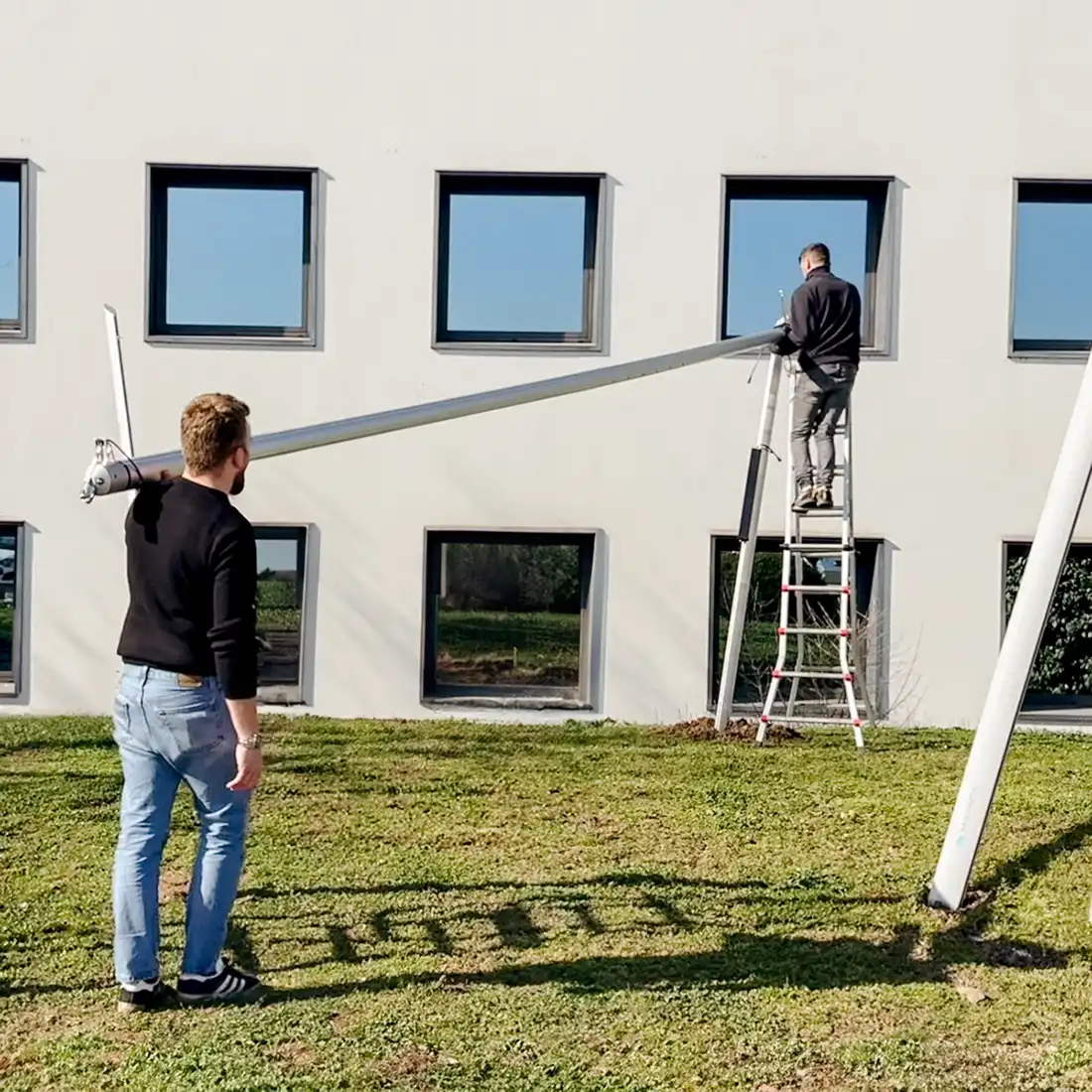
Point A should be the highest point of the roller tube.
The length of the roller (AC side) has a tolerance of 1 inch per side. This measurement must be taken with extreme care in PHASE 2, once the anchors are installed.
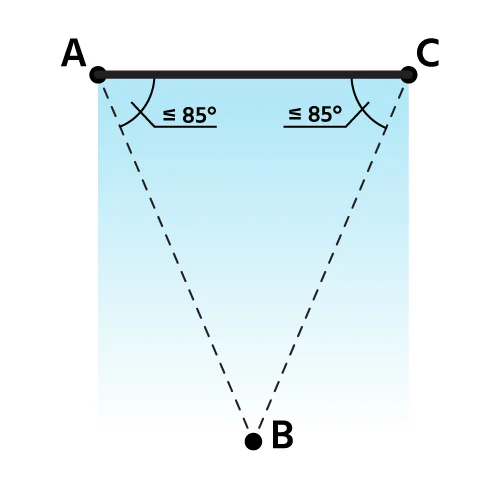
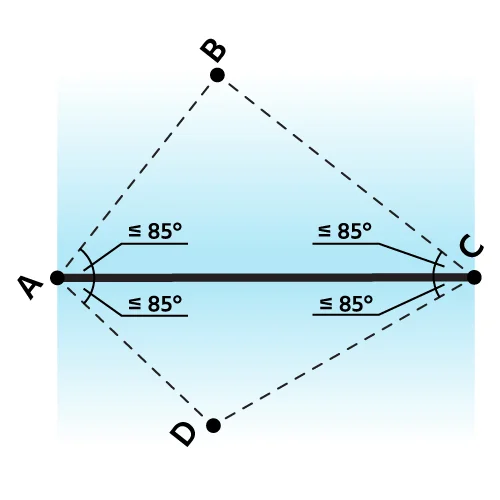
WARNING: See angle A and C degree restrictions in the specifications at the bottom of the page.
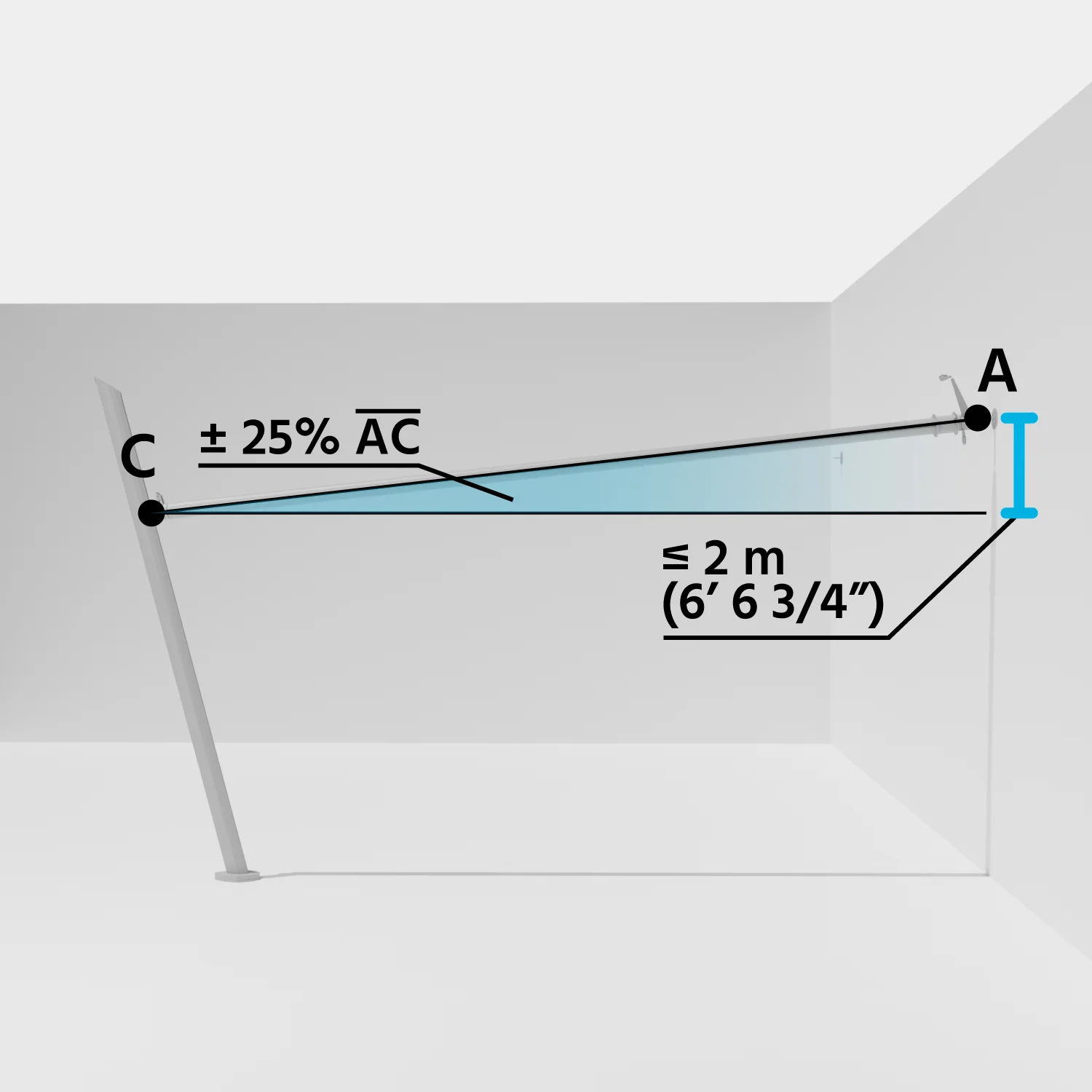
The roller can be tilted.
The maximum allowed tilt for the AC side is ± 25% of the roller length.
Example:
If the roller (AC side) is 8 meters long (800 centimeters),
Maximum tilt = 800 / 100 x 25 = 200 centimeters
IMPORTANT: If you choose to install the shade sail with a tilted roller, the actual distance between corner A and corner C will be greater than in a perfectly horizontal installation. This happens because tilting the roller increases the length compared to a parallel-to-the-ground setup.
TIP: It is recommended NOT to tilt the roller towards corner A, as it holds the motor.
NOTICE: Motorized roll-up shade sails must be installed with a proper inclination to ensure correct drainage of rainwater or hail. It is necessary to tilt the roller and/or one or more corners of the sail to create a slope of 25%.


General Constraints
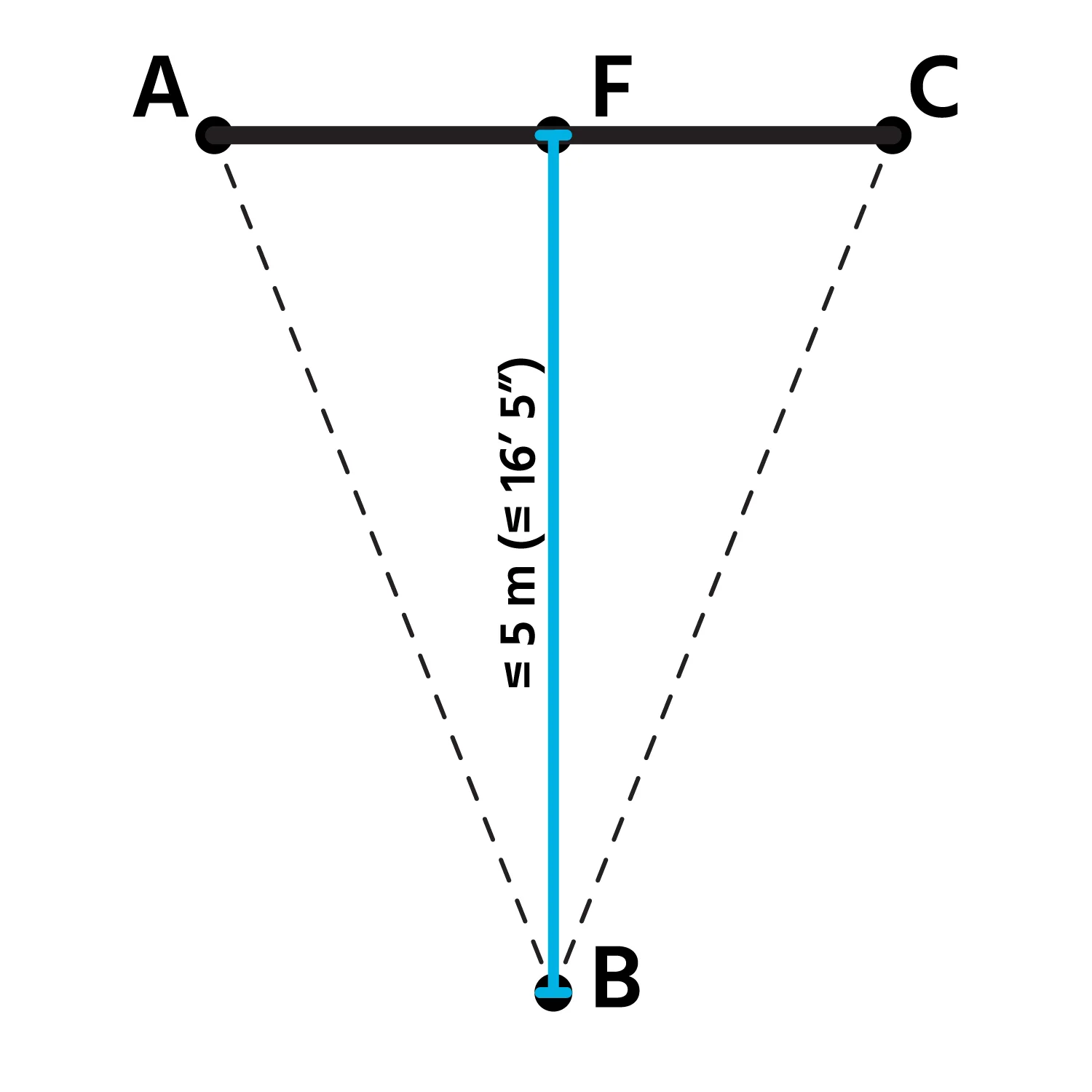
To ensure the successful completion of the project, it is essential to follow certain technical constraints during the design of the motorized retractable shade sail.
Special Constraints for Triangular Sails (Shape: Triangle)

Figure 1

Figure 2
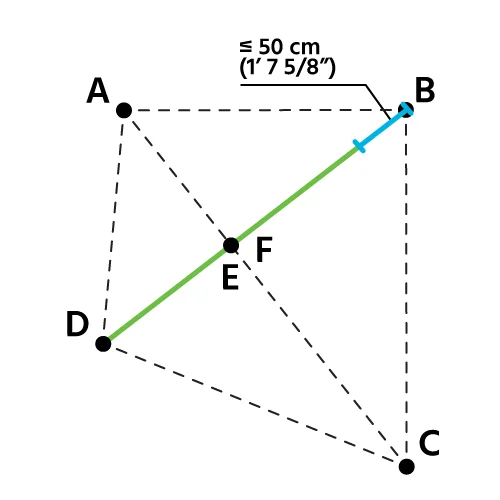
Special Constraints for Quadrilaterals (Shape: Square, Rectangle, Trapezoid)

Figure 3

Figure 4

Figure 5
Download the printed guide and note the dimensions we will ask for during the configuration process.